By Asbjörn Frydenlund, CEO, Nowhere Networks
There is a moment happening in our industry that is easy to feel, even if it’s harder to quantify at first glance. Everywhere we look, vessels consume more data. Crew rely on cloud tools. Passengers stream short-form video constantly. Operational systems, once isolated, now live online.
A few years ago, a ship using a terabyte (TB) or two per month was noteworthy. Today, some of our ferry customers exceed 100 TB per vessel, per month, and the curve is still pointing straight upward. This shift isn’t driven by a single application or a single user group. It’s everything at once.
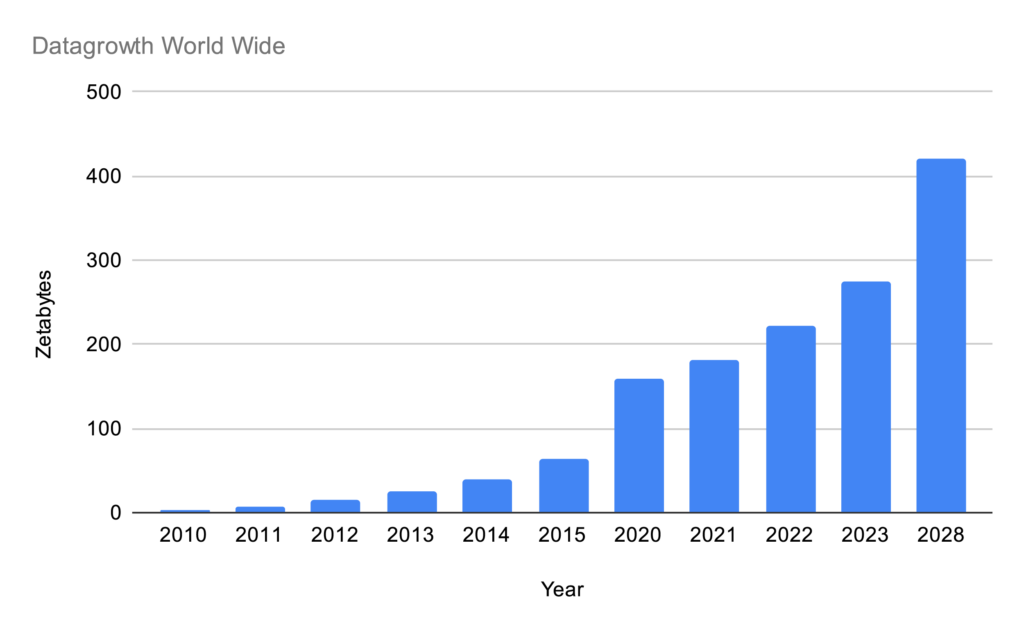
Data growth worldwide 2010-2028| Statista
Connectivity Is Infrastructure
Passengers don’t compare a ship’s internet to “what ships normally have.” They compare it to the office, the airport, the café, the living room. If they can’t send photos, join a call, or stream something during a journey, the experience feels broken, and they tell the shipping companies.
Crew expectations follow the same path. Cloud services like Teams and Office 365 — which would have been unthinkable onboard not long ago — are now part of normal daily operations. Customers call us when a digital meeting stutters, even if the vessel is already running at 500 megabits per second (Mbps) capacity.
Operational systems have also moved online
Examples include:
- route and fuel optimisation
- manifests and declarations
- inventory systems
- IoT sensors
- constant updates of charts, weather data and maintenance logs
Every one of these systems requires stable, low-latency bandwidth. And no one asks whether a ship “should” be online for them to work, they simply assume it will be.
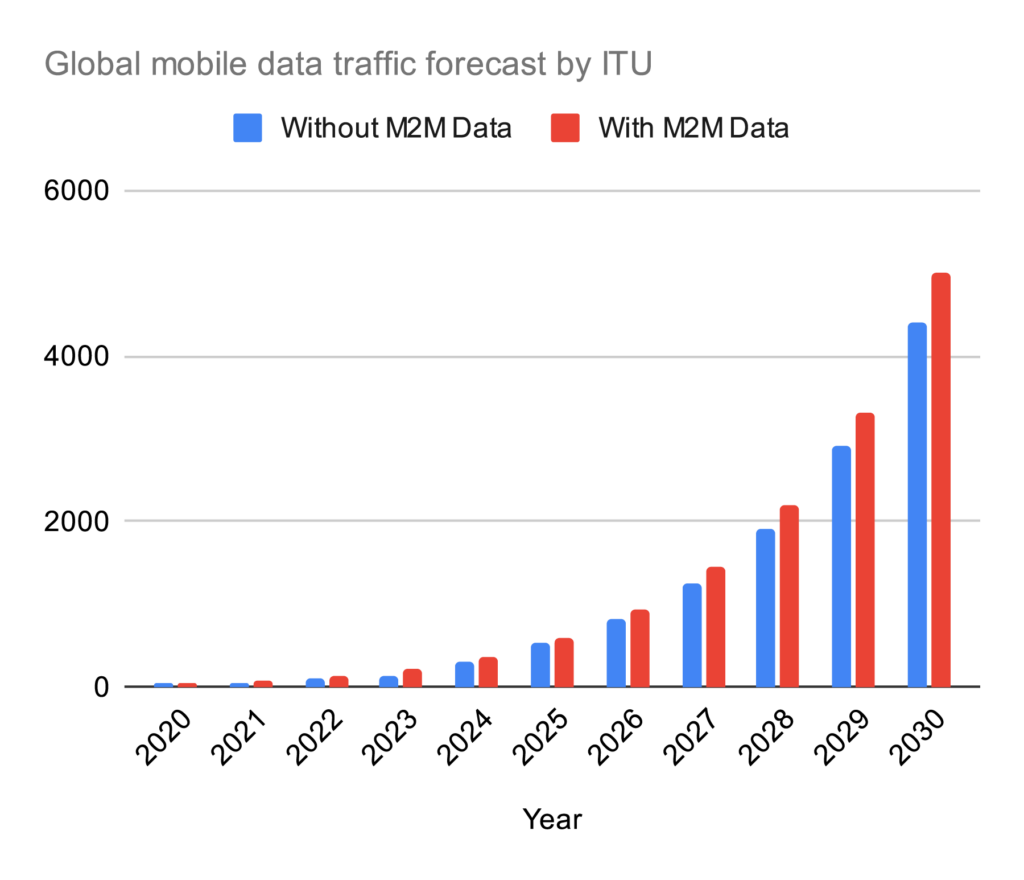
Global mobile data traffic forecast by International Telecommunication Union(ITU). Overall mobile data traffic is estimated to grow at an annual rate of around 55% in 2020-2030 to reach 607 exabytes (EB) in 2025 and 5, 016 EB in 2030. M2M means Machine-to-Machine data. (Source: Cisco)
Why Demand Is Accelerating So Quickly
Three major forces are converging:
1. Passenger behaviour has changed permanently
Social feeds have shifted from photos to video. A single swipe through short clips can consume more bandwidth than browsing used to consume in an entire day. This is how people communicate now, and it’s happening on every voyage, large or small.
2. Cloud-first operations are becoming the norm
Ship operators increasingly treat their vessels as true extensions of the corporate network. The push for real-time information, predictive maintenance, and connected workflows requires connectivity that never pauses.
3. Crew welfare standards are rising
What used to be considered “generous” access now feels insufficient. Connectivity is part of retention. And unlike passengers, crews are onboard continuously — their usage is steady, heavy and essential.
When all of these factors compound, the result is clear: ships need dramatically more bandwidth than ever before — and they need it every minute of every route.
A Network Built for This Reality
When we built Nowhere Networks’ connectivity system, it wasn’t to chase a theoretical need. It was to meet a very real, very practical one: high capacity, low latency, and predictable cost at sea. By owning the entire chain — antennas, radio links, control systems, onboard gateways, cloud management — we can keep up with the demand curve rather than react to it.
Today our network delivers hundreds of megabits per second with latency comparable to shore-based fibre connections. And with our hybrid approach — land-based radio, LTE (Long-Term Evolution), and LEO (Low Earth Orbit) — vessels always have access to the best available link, automatically.
The goal is to ensure that operators can run modern digital fleets without worrying about what happens behind the scenes.

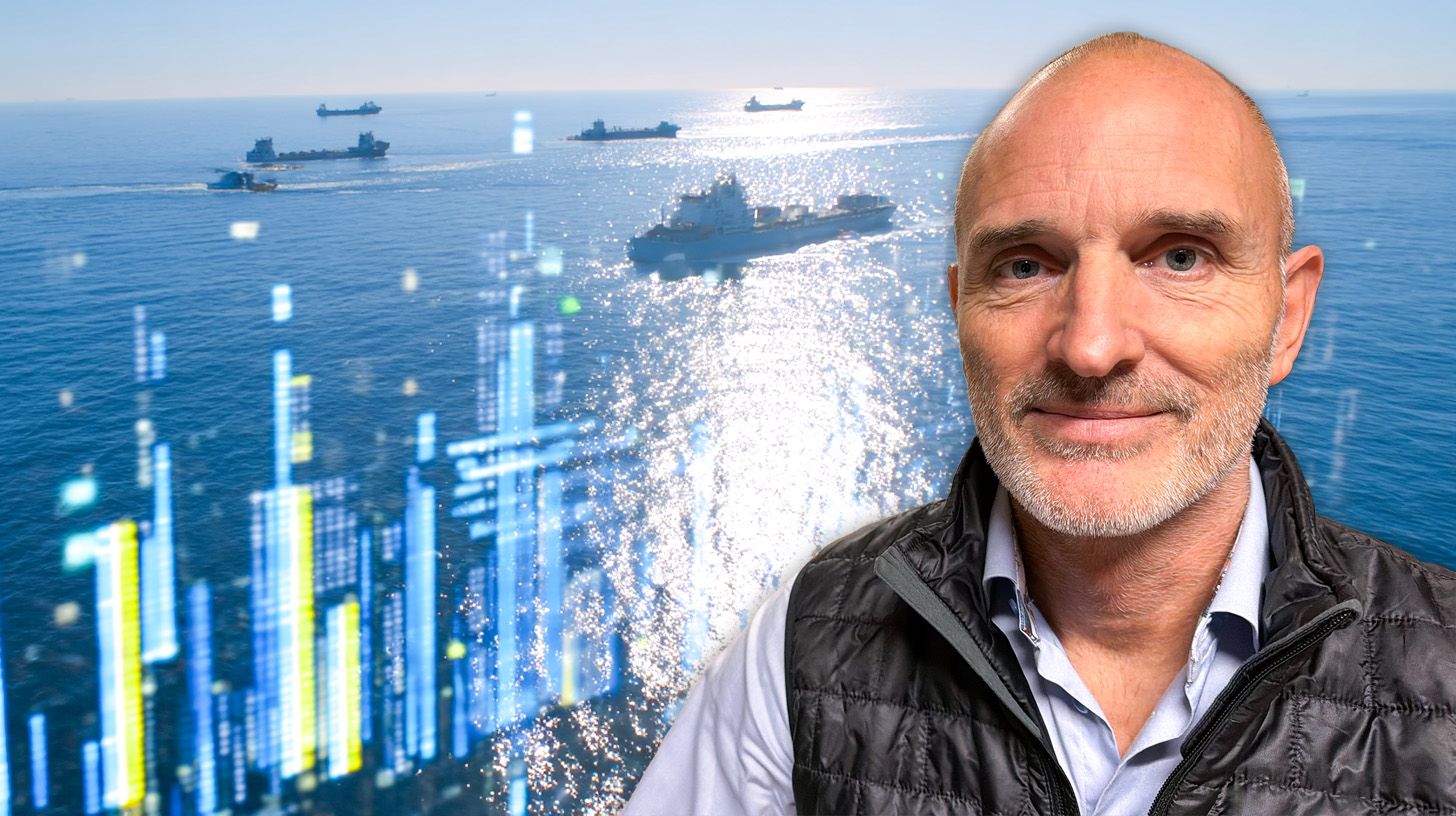
Asbjörn Frydenlund, CEO, Nowhere Networks, looking into one of Nowhere Networks 3D printers.
What Operators Tell Us Now
In discussions with ferry operators, cruise lines and cargo fleets, a pattern appears consistently:
- “We used to ask what we could skip. Now we ask what more we can bring onboard.”
- “Passenger expectations grow every season.”
- “Crew usage is exploding.”
- “Operational systems are moving faster than our old connectivity model can handle.”
Underneath all of these comments lies a simple truth: the future of maritime operations depends on uninterrupted, scalable, cost-efficient internet.
Data Usage Continues to Rise Sharply
We expect data usage to continue rising sharply. The shift from on-premise to cloud is not slowing down. Passenger and crew behaviours will not revert to what they were five years ago. And the competitive pressure around customer experience is intensifying, especially in ferries and cruise.
Our focus at Nowhere Networks is to stay ahead of that demand — expanding our land-based footprint, refining our hybrid traffic management, and giving operators the confidence that connectivity will never be the limiting factor in their ambitions.
Good internet at sea is the foundation everything else stands on. And we’re building the network for the next decade of that reality.