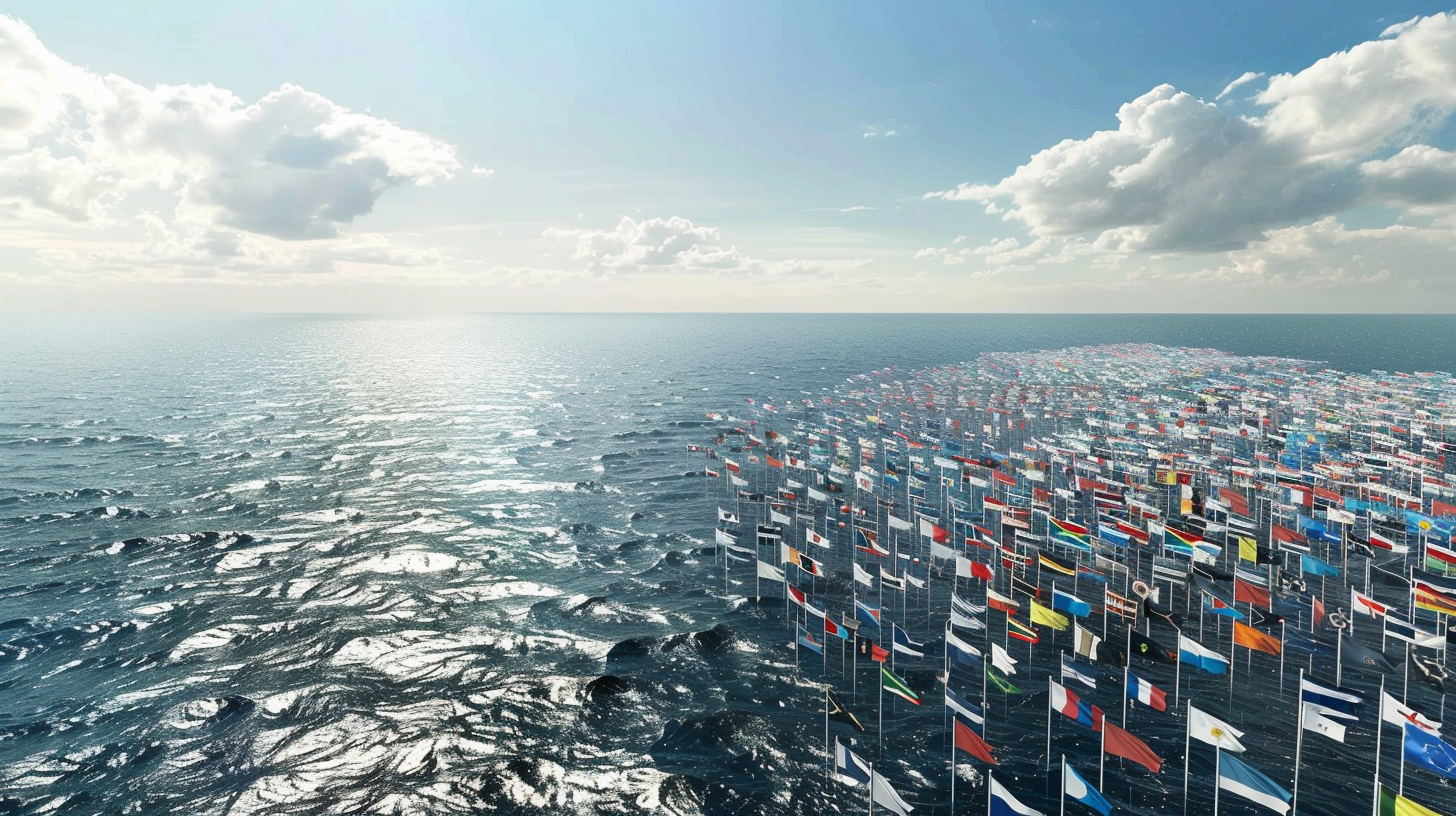
European policymakers have begun to frame the issue in those terms. In discussions around digital sovereignty, Europe’s reliance on external infrastructure providers has become a central concern. Today the EU estimates it depends on non-EU countries for more than 80% of digital products, services and infrastructure.
At the same time, the maritime sector itself is becoming even more critical — and more connected. As the EU highlights in its maritime security framework:
“More than 80 % of global trade is transported by sea.”
For ferry operators and cruise lines this creates a new operational question: dependency on a single connectivity provider or technology.
The industry’s response is increasingly hybrid connectivity; combining different network types instead of relying on only one.
The Third Layer of Maritime Connectivity
Nowhere Networks has taken this approach further by adding a third layer to maritime connectivity:its own land-based network. While many solutions combine satellite and mobile coverage, Nowhere Networks also operates a dedicated coastal infrastructure with its own antennas and trackers on land and onboard vessels along major European routes. This network is continuously expanded, optimized and strengthened as traffic patterns evolve and new routes are added.
That adds a high-capacity, low-latency layer to the connectivity mix – especially where ferries and cruise ships spend much of their time. Rather than relying on two network types, ships can use three: land-based maritime broadband, mobile networks and LEO satellite. The result is a more flexible and resilient architecture, where each layer plays to its strengths.
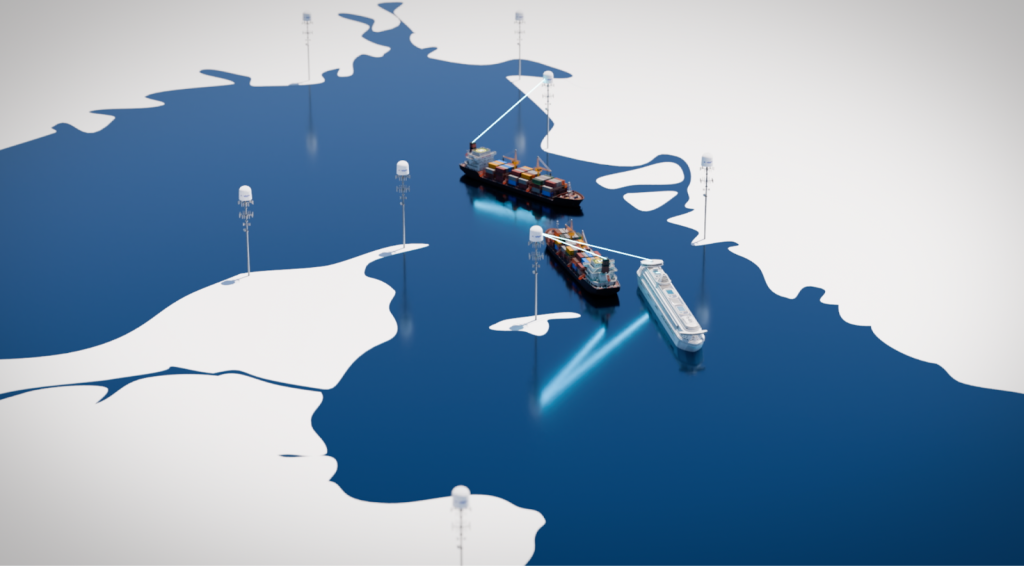
In practice, ships combine several connectivity layers:
- Nowhere Networks’ land-based maritime broadband along coastlines.
- LEO satellite systems offshore.
- LTE / 5G mobile networks.
For European ferry and cruise operators this model is particularly effective. Most routes remain close to land, where terrestrial networks can deliver far higher capacity and lower latency than satellite alone. Satellites still provide global reach, but they no longer carry the entire load.
The result is a more resilient architecture: global where necessary, regional where possible. And it’s about resilient infrastructure, diversified networks, and reducing geopolitical dependency in critical systems.